NAMA’s 2024–2025 census provides context for workplace vending and micro markets. Here is how to translate industry research into a practical site plan.
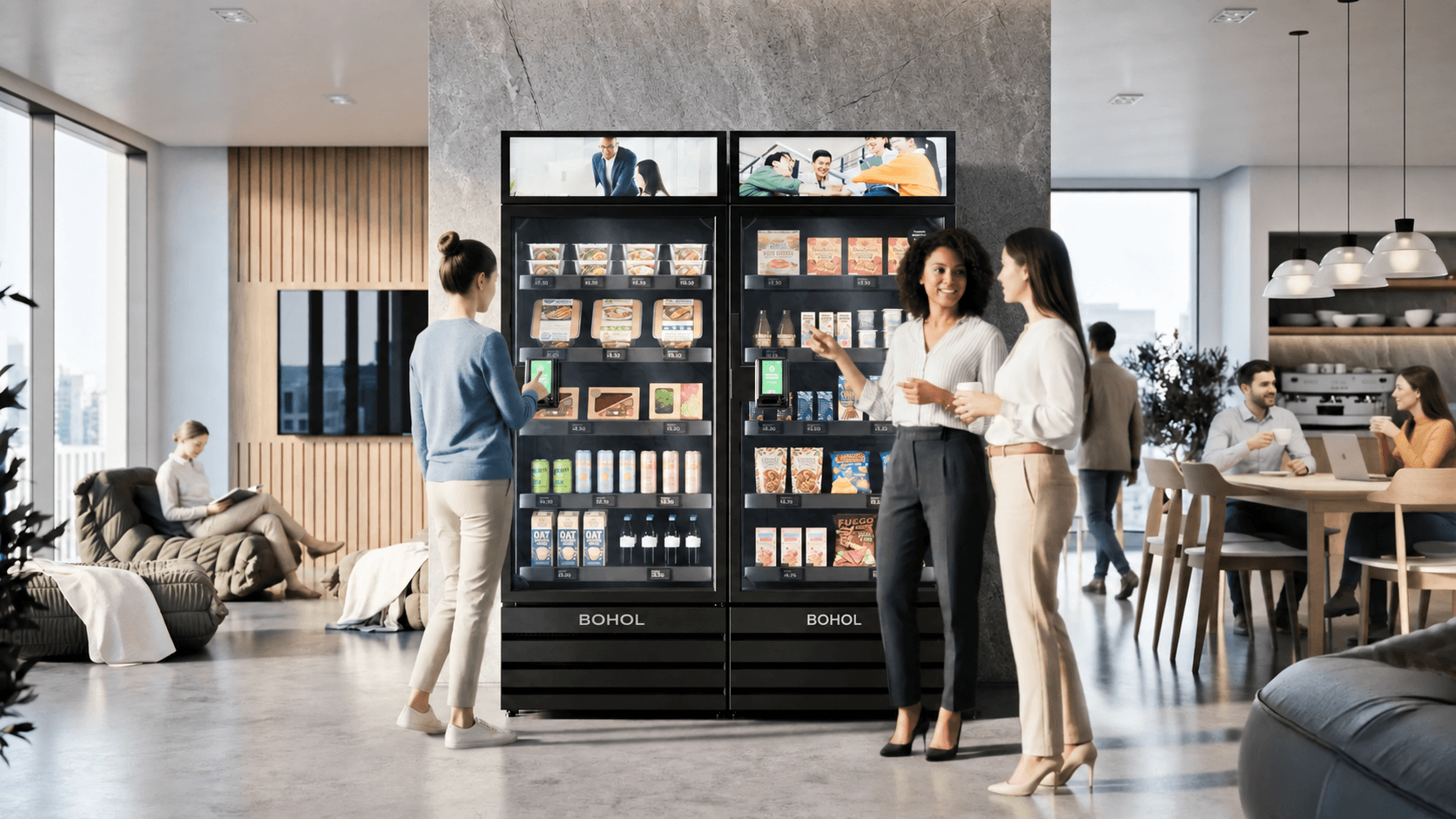
NAMA’s latest census examines vending, micro markets, office coffee and pantry services together. Operators should select a retail format around access, assortment and replenishment—not assume every workplace needs the same machine.
Based on the public overview of NAMA’s 2024–2025 census. The full member report was not used.
The NAMA Foundation’s 2024–2025 industry census overview describes research developed with Technomic into self-service retail and workplace amenities. It covers the evolving mix of vending, micro markets, office coffee and pantry services.
The public overview establishes the scope of that research; it does not provide enough detail to reproduce all the report’s benchmarks. This article therefore focuses on practical buying implications rather than presenting unverified revenue forecasts or payback promises.
An office vending machine dispenses a selected product through a controlled delivery process. A micro market generally offers a broader self-service shopping environment. An access-controlled cabinet introduces another buying flow. These differences affect product visibility, payment, customer instructions and how an operator investigates an exception.
Before comparing prices, write down the expected transaction: a worker buying one drink, a visitor choosing lunch, or a late-shift team collecting several items. Then specify packaging, temperature needs and replenishment access. A workplace vending solution should answer that brief, rather than use the label “smart” as a substitute for an operating model.
BOHOL’s planning recommendation is to observe actual attendance across the week. A building’s registered employee population can differ substantially from the people present at lunch or after hours. Ask the site manager about visitors, shifts, remote-working patterns and planned changes to building use.
Record alternative food outlets and their opening hours. A location may offer strong convenience value late in the day while facing intense competition at lunchtime. Pilot stock should reflect those observations, with a manageable assortment that the operator can refill consistently.
Agree how sales, stockouts, waste, refunds and service time will be recorded. Review results by day and product, rather than relying only on an overall sales total. A product that sells out early can look weak in the data simply because it was unavailable for much of the day.
For expansion, carry forward the parts of the operating plan that worked: assortment, refill access, payment support and response responsibilities. Adjust cabinet capacity only after identifying the real constraint. Discuss OEM and ODM vending configuration when the site requires a different footprint, product channel or brand presentation.
No. Access, product range, attendance and the operator’s service model determine whether vending, a micro market or another format is appropriate.
This guide makes no payback guarantee. A site-specific model needs actual sales, costs and service assumptions.
Original sources checked on 12 September 2026. Industry bodies cited here do not endorse this article or BOHOL products.
Connect the research to your product, location and service model.
Discuss your vending machine requirements →Share your product, target market and customization requirements.
sales@boholvending.comYour details are used to respond to your enquiry.