Match vending delivery systems to packaging, product protection and customer pickup. A practical validation guide for drinks, beauty products and card packs.
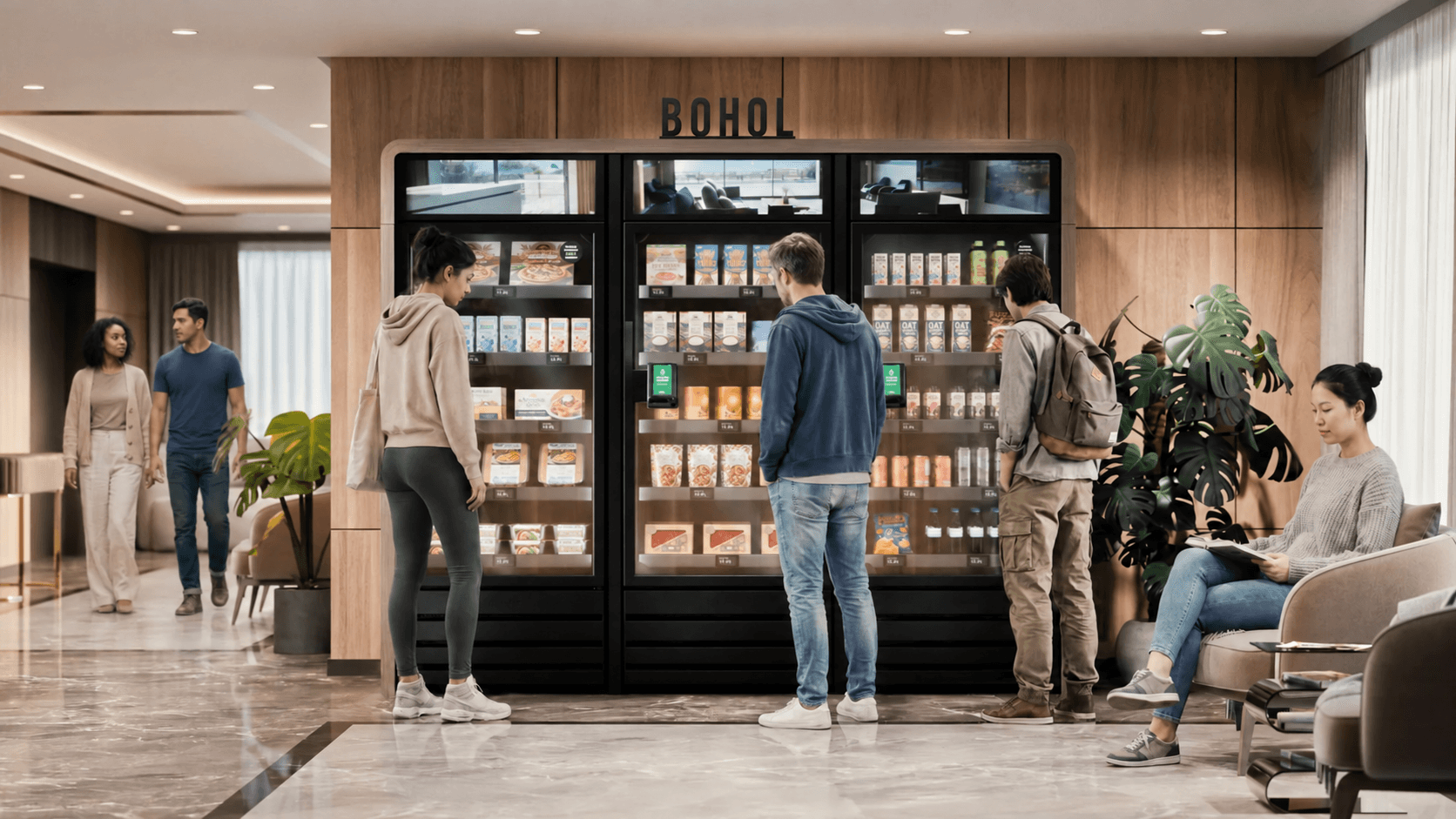
Choose a vending delivery system by testing the real product through the full purchase cycle. Package geometry, permitted handling, refill access and customer retrieval are more useful starting points than cabinet appearance.
BOHOL engineering guidance, with food-retail context linked separately to FDA resources.
List each product’s dimensions, weight, packaging material and normal variations. Include soft packs, glossy cartons, round bottles and any fragile items. Test the smallest and largest intended packs, rather than approving a complete assortment from one representative sample.
The purpose is to identify where a product can rotate, catch, compress or land incorrectly. Record the orientation used during refill and the customer’s pickup position. A channel that performs well with carefully aligned samples can still be difficult to operate if everyday replenishment is ambiguous.
A spiral advances a product from a shelf, so package shape, spacing and the path to collection need evaluation. An elevator can provide a controlled transfer, but introduces moving parts and takes up cabinet space. Dedicated channels may suit a narrower product family while reducing flexibility when the assortment changes.
These are engineering trade-offs, not universal performance claims. Compare an elevator vending machine with the proposed alternative using identical products and an agreed acceptance method. Include cycle time, usable capacity, recovery access and what happens after an incomplete delivery.
Protecting a package from impact does not establish that it has been stored correctly. For refrigerated food, the product’s storage requirements and the operating procedure need a separate review. The FDA Food Code resources provide US retail-food reference material; the applicable local authority determines the requirements for a particular operation.
Ask how temperatures are checked after replenishment, how an exception is detected and who decides whether stock can be sold. Do not interpret a chilled cabinet or a temperature display as evidence that every proposed food product is suitable.
Agree the assortment, sample quantities, loading conditions and the definition of a successful vend. Record failures by product and mechanism, with photographs or video where useful. Re-run the relevant checks after any change to shelf spacing, packaging or the delivery path.
For card pack vending machines, focus on pack thickness, catching points and presentation at collection. For eyelash vending machines, include the retail carton and any protective sleeve. A signed sample configuration makes later changes easier to evaluate and reduces ambiguity between the buyer and manufacturer.
No. The choice depends on the product and the balance between handling, capacity, cycle time and maintenance.
It can, but material changes should trigger a new delivery test before the revised assortment is deployed.
Original sources checked on 12 September 2026. Industry bodies cited here do not endorse this article or BOHOL products.
Connect the research to your product, location and service model.
Discuss your vending machine requirements →Share your product, target market and customization requirements.
sales@boholvending.comYour details are used to respond to your enquiry.